
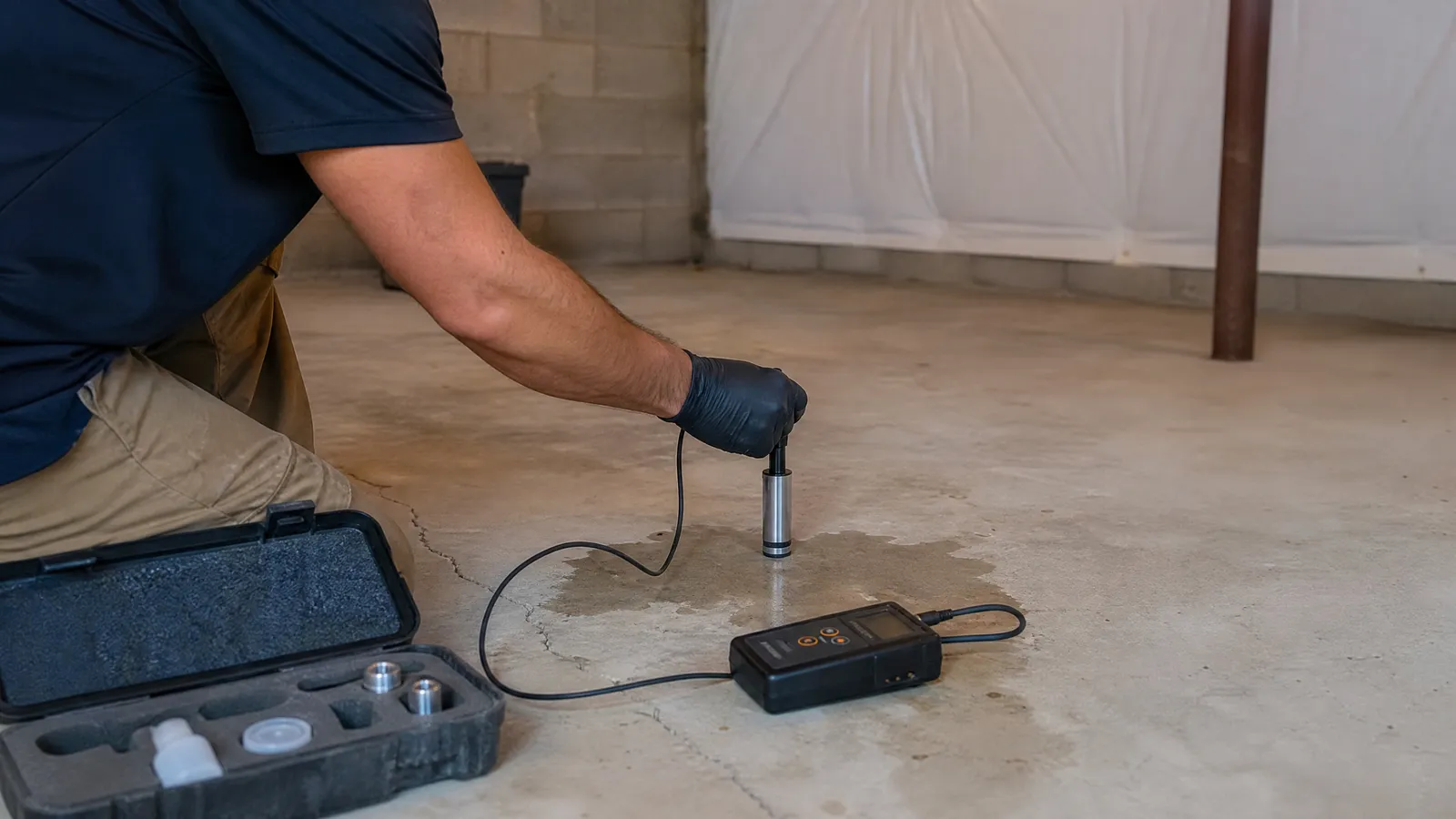
How to Test Concrete for Moisture Before Epoxy in Sumter, SC
Learn how to moisture test concrete before epoxy, what the results mean, and why it matters for Basement Epoxy Floors in humid Sumter, SC. Plain, practical advice.
A basement floor that looks dry can still push water vapor up through the slab, and that vapor is behind many peeling and bubbling coatings. At Sumter Epoxy Floors, we think the smartest step before any coating is to moisture test concrete before epoxy goes down. In a humid Sumter summer, it matters even more. This guide explains the common tests, what the numbers mean, and what you can check yourself before you call anyone.
Why Basement Slabs Hold Moisture
Concrete is porous, and a basement slab sits against the ground. Water in the soil can move up through it as vapor, even when you never see a puddle. Epoxy forms a tight film on the surface, so it traps that vapor. Pressure builds under the coating until it bubbles, clouds, or lifts.
Sumter makes this more likely. The area has a humid subtropical climate, with average daily highs of 87.3°F in June, 90.2°F in July and 88.5°F in August (Wikipedia, Sumter, South Carolina, accessed Oct 2026). Warm, damp air meeting a cool basement slab is a recipe for moisture, so epoxy concrete moisture problems are worth checking for, not guessing at.
The Main Ways to Test a Slab
The plastic sheet check (DIY)
Tape a 2-foot square of clear plastic to bare concrete, seal every edge, and leave it for 24 hours. Droplets under the plastic or a darkened patch of concrete mean moisture is moving through. This is only a rough warning sign. It cannot give you a number, and a clean result does not prove the slab is dry.
Calcium chloride test (ASTM F1869)
This test measures how much moisture vapor leaves the surface. The catch is that it reads only the top quarter inch of the slab, so it can miss moisture deeper down (Construction Canada, accessed Oct 2026).
In-situ relative humidity test (ASTM F2170)
Small probes are placed in holes drilled into the slab. For a slab that dries from one side, which is typical for a basement on the ground, the probes sit at about 40 percent of slab depth. A slab that dries from both sides uses 20 percent (Wikipedia, Epoxy moisture control system / One Stop Epoxy, accessed Oct 2026). Because it reads inside the concrete, many installers prefer it for a true picture.
What the Results Mean
Typical epoxy coatings call for slab relative humidity of 75 percent or lower, but the coating maker’s data sheet sets the real limit for each product (One Stop Epoxy, accessed Oct 2026). That second part matters. Always match the reading to the specific product going on your floor.
If the slab reads too high, you have options:
- Wait and retest after the slab dries out
- Fix the source, such as gutters, grading or a leaking line
- Use a moisture-control primer made for damp slabs
Polyaspartic coatings need extra caution. They should not go on a slab with a high moisture vapor emission rate, because moisture can make the coating bubble up and lift (Concrete Network, accessed Oct 2026).
Testing Fits Into the Bigger Prep Picture
Moisture testing is one step in a longer prep process. After testing, the slab is cleaned, cracks are repaired, and the surface is ground or etched so the coating can grip. Prep add-ons are priced separately: basic cleaning and etching adds about $1 to $2 per sq ft, diamond grinding adds about $2 to $4, and crack repair adds about $3 to $5 (Intermountain Coatings, July 2025). Our Basement Epoxy Floors page walks through the full process, including how we handle damp or older slabs.
Key Takeaways
- Basement slabs can pass vapor through even when the floor looks dry.
- The plastic sheet check is a quick warning, not a real measurement.
- The ASTM F2170 in-situ test reads inside the slab and is generally the more reliable option.
- Your coating’s data sheet sets the moisture limit, not a one-size rule.
- Fix the water source first. A coating will not solve a moisture problem.
Get a Free Estimate
Not sure whether your basement slab is ready for coating? We offer a free on-site estimate with a written quote, and we explain each prep step as we go. We’re local to Sumter County, so a visit or a follow-up is never a long drive. Learn more about Basement Epoxy Floors, then Get a Free Estimate or call (839) 600-9293.
Frequently Asked Questions
Yes, especially for a basement. Testing shows whether vapor is moving through the slab, which is a leading cause of peeling and bubbling. A test costs far less than stripping and redoing a failed floor, and it tells you which primer or product suits your slab.
You can run the plastic sheet check for a rough sign of trouble. It cannot measure vapor levels, so a clean result is not a guarantee. For a reliable reading, a professional test such as ASTM F2170 gives you a number to compare against the product's data sheet.
Don't coat it yet. Find and fix the source, such as drainage or a leak, then let the slab dry and retest. If moisture stays high, a moisture-control primer or a different coating system may be the answer, depending on the manufacturer's requirements.
Ready for a floor that lasts?
Tell us about your garage, patio or shop floor. We reply with a written estimate and explain exactly how the concrete will be prepared.