
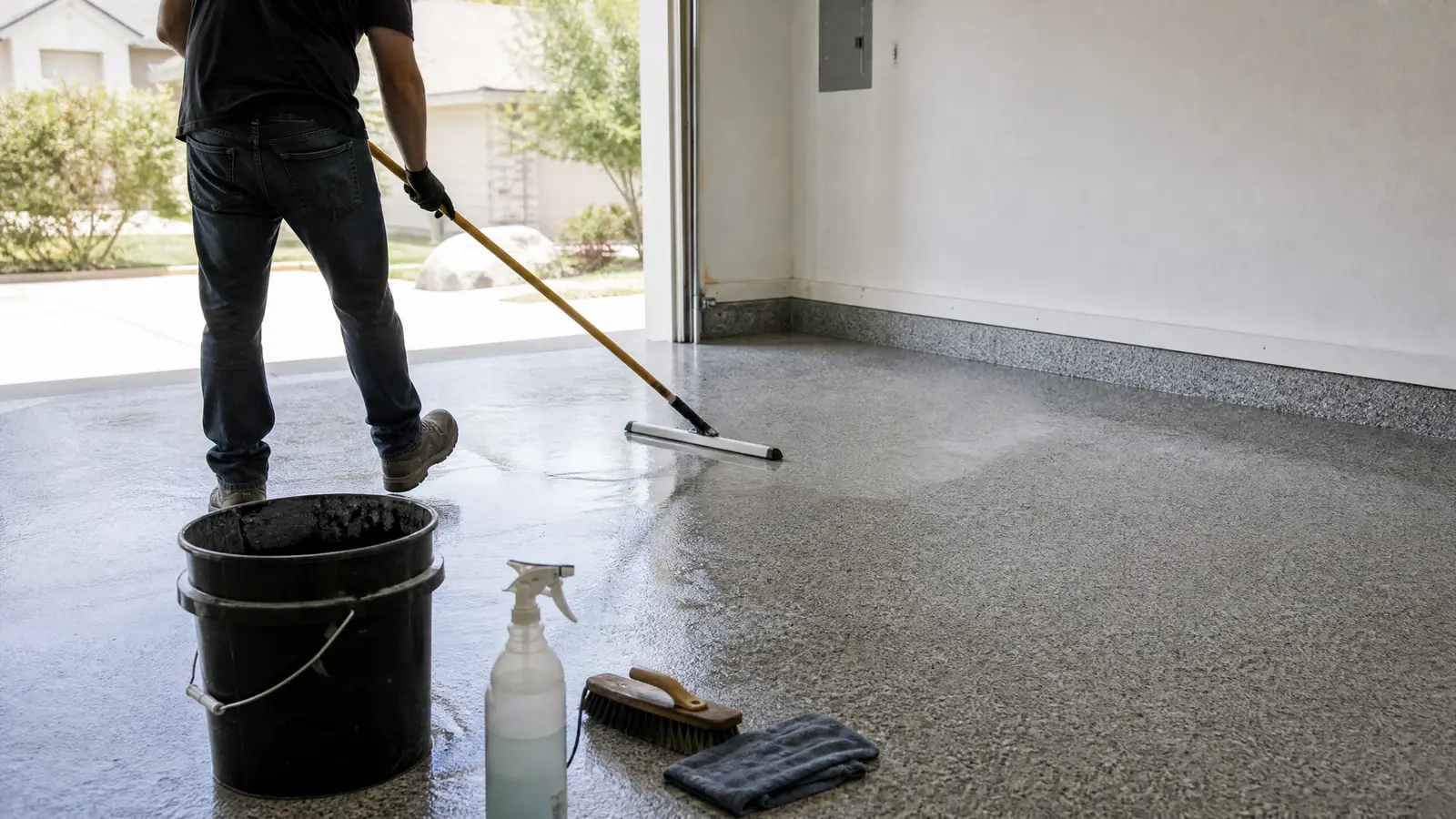
How to Clean and Care for an Epoxy Garage Floor in Sumter, SC
Learn how to clean an epoxy garage floor, remove stains and tire marks, and protect the finish in humid SC summers. Tips from Epoxy Garage Floor Coating pros.
A clean epoxy garage floor is easy to keep that way, and it rarely takes more than a broom, a mop and a little know-how. The trouble is that a lot of well-meant cleaning advice does more harm than good. Harsh solvents, stiff wire brushes and the wrong degreaser can dull a finish that cost real money. This guide from Sumter Epoxy Floors covers what to use, what to skip, and how to deal with the things Sumter garages throw at a floor, from summer humidity to hot tire marks.
What a Weekly Routine Looks Like
Most of the work is dry. Grit is the real enemy of a glossy coating, because sand and gravel tracked in on tires act like fine sandpaper underfoot. A dust mop or a soft push broom once a week keeps that grit from scuffing the surface.
Once a month, or after a muddy week, wet-clean the whole floor:
- Sweep or vacuum first so you aren’t pushing grit around.
- Mix warm water with a few drops of mild dish soap or a pH-neutral floor cleaner.
- Work a soft microfiber or foam mop over the floor in sections.
- Rinse with clean water and squeegee or mop up the extra, so no soap film is left behind.
That last step matters more than people expect. Leftover soap dries into a hazy layer that makes a good floor look cloudy and a bit slick.
Stains, Spills and Hot Tire Marks
Wipe up oil, antifreeze, brake fluid and battery acid as soon as you spot them. A cured epoxy coating resists most garage fluids, but “resists” isn’t “ignores forever.” A spill left for days is harder to lift and can leave a shadow.
For stuck-on spots, spray a diluted degreaser made for coated floors, let it sit a few minutes, and scrub gently with a soft nylon brush or a white pad. Skip steel wool and metal scrapers, which scratch the surface.
Hot tire marks deserve a mention, because they worry people. Tires that have been on a hot road can leave a rubbery residue, and softer or poorly cured coatings can mark or even lift. A properly prepped and fully cured epoxy normally cleans up with the same degreaser and a soft pad. If tire marks keep bonding to the floor, the coating or the way it was applied is worth a closer look, and that’s something to raise with an installer.
Be careful with these:
- Bleach and ammonia: can discolor or dull some finishes.
- Acidic cleaners such as vinegar: can etch the surface over time.
- Pressure washers: fine for rinsing at moderate pressure, but a hot, narrow jet can damage edges and cracks.
Sumter Summers and Your Floor
Sumter’s humid subtropical climate means hot garages. Average daily highs reach 87.3°F in June, 90.2°F in July and 88.5°F in August (Wikipedia, Sumter, South Carolina, accessed Oct 2026), and a closed garage runs hotter than the air outside. Heat and humidity affect your floor in a few practical ways:
- Condensation: damp air can leave a film of moisture on cool concrete. Wipe puddles off the coating so they don’t sit.
- Hot tires: summer driving makes pickup marks more likely, so clean any residue promptly.
- Sun through the door: direct sunlight can yellow some epoxy over time. Installers describe polyaspartic coatings as UV stable (Concrete Network, accessed Oct 2026), though that is a manufacturer and installer claim, not an independent test result.
If you ever see bubbles, blisters or lifting patches, don’t just scrub at them. Moisture coming up through the slab is a common cause, and it’s the reason moisture testing before any coating goes down is worth doing. Typical epoxy coatings call for slab relative humidity of 75 percent or lower, though the coating maker’s data sheet sets the real limit for each product (One Stop Epoxy, accessed Oct 2026).
Small Habits That Protect the Finish
- Put a mat or drip tray under cars that leak.
- Lift heavy items instead of dragging them. Jack stands and toolboxes are best set on rubber pads.
- Use a non-marking, soft-wheeled mat under a rolling toolbox.
- Avoid dropping sharp or heavy tools onto the floor.
- Check the floor each spring and fall for chips, worn spots or lifting corners.
Small chips and worn areas are far cheaper to deal with early. If you’re thinking about a new floor or a recoat, our epoxy garage floor coating page explains how surface prep is done step by step.
Key Takeaways
- Sweep weekly and wet-clean monthly with warm water and a pH-neutral cleaner.
- Rinse well, because leftover soap leaves a dull, slippery film.
- Skip bleach, ammonia, vinegar, steel wool and harsh solvents.
- Clean spills quickly, and treat bubbling or lifting as a sign to get the floor checked.
- Soft pads, mats and drip trays do a lot to protect the finish.
Get a Free Estimate
If your floor is peeling, stained or past cleaning, Sumter Epoxy Floors offers a free on-site estimate and a written quote. Call (839) 600-9293 or request a Get a Free Estimate visit today.
Frequently Asked Questions
Yes, at moderate pressure with a wide fan tip, mainly to rinse. Avoid hot, narrow jets, which can damage edges, joints and any weak spots. For regular cleaning, a soft mop and a mild cleaner do the job with less risk to the coating.
A pH-neutral floor cleaner or a few drops of mild dish soap in warm water works for routine cleaning. For oily spots, use a diluted degreaser meant for coated floors. Always rinse afterward so no residue is left on the surface.
Cloudiness usually comes from soap residue, hard-water film or fine scratches from grit. Rinse thoroughly and mop dry first. If the dullness remains, the topcoat may be worn, and a light recoat is often the fix rather than more scrubbing.
Ready for a floor that lasts?
Tell us about your garage, patio or shop floor. We reply with a written estimate and explain exactly how the concrete will be prepared.