
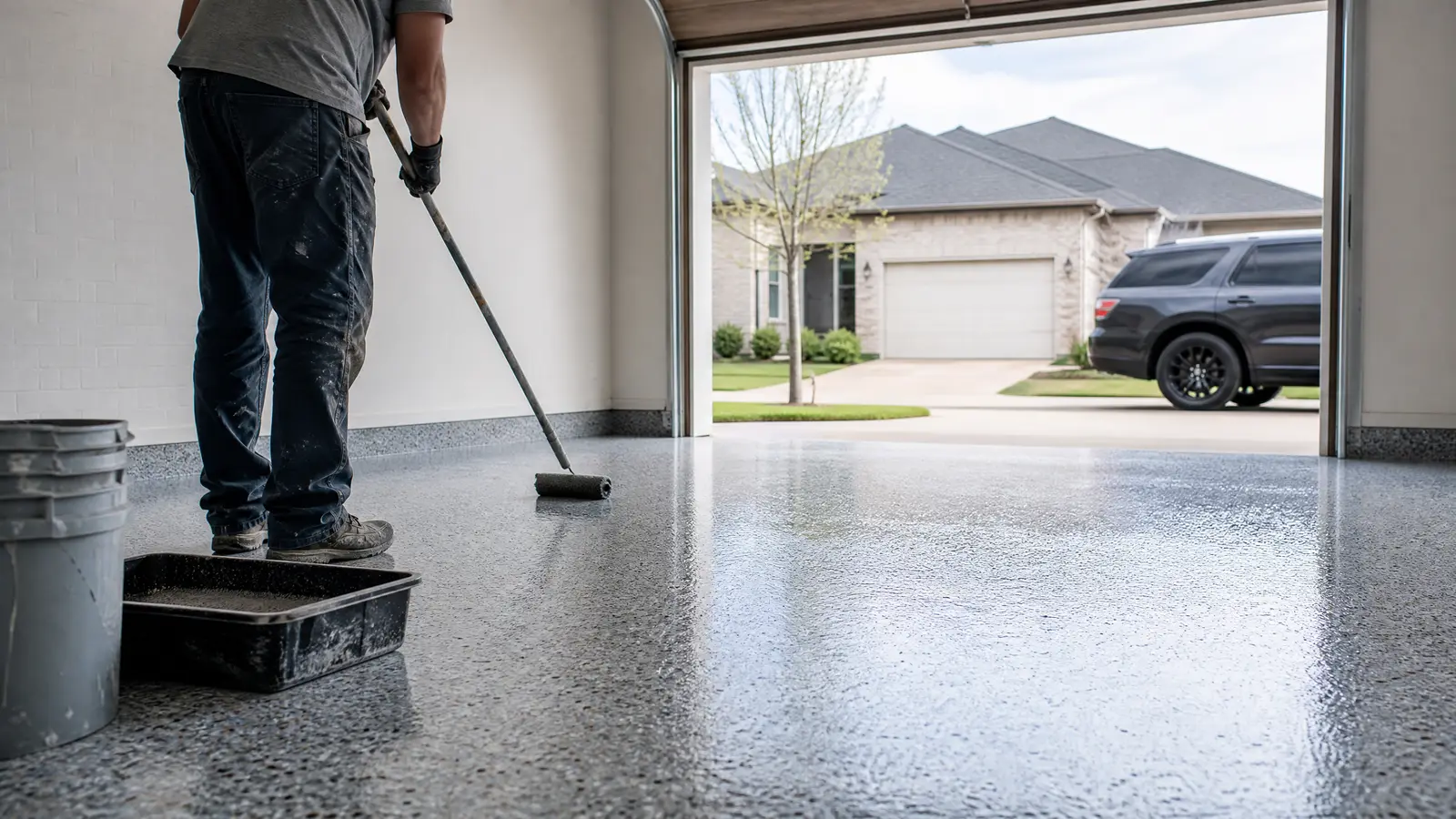
How Long for Epoxy Floor to Cure in Sumter, SC? When You Can Drive on It
Learn how long an epoxy floor takes to cure, when you can drive on it, and how moisture and Sumter heat matter. Guide to Epoxy Garage Floor Coating.
You’ve spent a weekend clearing the garage, and now the floor is coated and looking good. The next question is how long for an epoxy floor to cure before the car can roll back in. Drive on it too soon and hot tires can leave marks or lift the coating. Wait longer than you need to and you’re parking on the street. Sumter Epoxy Floors explains below how cure stages work, what slows them down in a humid Sumter summer, and how to protect the finish.
How soon can I walk and drive on a new epoxy garage floor?
Walking on the floor in socks or clean soft shoes is usually safe after about a day, and cars generally wait longer, often several days. Exact times depend on the product, so follow the manufacturer’s data sheet and your installer’s written instructions rather than a general rule of thumb.
Epoxy goes through stages rather than flipping a switch:
- Tack-free: The surface no longer feels sticky, but the coating is still soft underneath.
- Light foot traffic: The floor can take careful walking, with no dragging, no heavy items and no pets with sharp claws.
- Vehicle traffic: The coating has hardened enough to resist the weight and heat of tires.
- Full cure: The chemical reaction is essentially finished and the floor reaches its intended hardness and chemical resistance.
Full cure usually trails vehicle-ready by a while. A floor can look finished and still be softer than it will eventually become, so go easy on it at first.
What changes cure time in a humid South Carolina summer?
Temperature, humidity and the type of coating all shift the schedule. Warm slabs tend to cure faster, while cool, damp ones slow the reaction. Sumter’s heat adds its own wrinkle, since average daily highs reach 87.3°F in June, 90.2°F in July and 88.5°F in August (Wikipedia, Sumter, South Carolina, accessed Oct 2026).
Heat can speed up the working time of the coating, which means less time for the installer to spread it evenly. Humidity matters for a different reason: moisture in the air and in the slab can interfere with how the coating bonds. That is why a garage with the door open on a muggy afternoon is not ideal, and why an installer may choose early-morning starts or adjust the product for summer conditions.
Other factors that can stretch the timeline:
- Thick coats or multiple layers
- A cool, shaded garage with poor airflow
- Slab moisture rising from below
- Product type, since water-based, solvent-based and 100% solids epoxies each behave differently
Why moisture testing comes before the cure clock starts
A floor that peels usually fails because of what happened before the coating went down, and slab moisture is a leading cause. Testing is how you find out whether the concrete is dry enough to hold epoxy.
Two common methods exist. The ASTM F2170 in-situ relative humidity test places probes at about 40 percent of slab depth for slabs that dry from one side, or 20 percent when they dry from both sides (Wikipedia, Epoxy moisture control system / One Stop Epoxy moisture testing guide, accessed Oct 2026). The ASTM F1869 calcium chloride test measures only the top quarter inch of the slab, so it can miss deeper moisture (Construction Canada, accessed Oct 2026).
Typical epoxy coatings call for slab relative humidity of 75 percent or lower, but the coating maker’s data sheet sets the real limit for each product (One Stop Epoxy, accessed Oct 2026). If moisture runs high, a moisture-control primer or a different product may be the better route. Polyaspartic coatings in particular should not go over a slab with a high moisture vapor emission rate, because moisture can make the coating bubble up and lift (Concrete Network, accessed Oct 2026).
How prep affects how long the floor holds up
Prep happens before any coating goes on, and it decides how well the epoxy bonds. The usual sequence looks like this:
- Clear the garage and inspect the slab for cracks, oil stains and old sealers.
- Clean and degrease the concrete.
- Grind or etch the surface so the epoxy has something to grip. Basic cleaning and etching adds about $1 to $2 per sq ft, and diamond grinding for damaged concrete about $2 to $4 per sq ft (Intermountain Coatings, July 2025).
- Repair cracks and pits. Crack repair and patching adds about $3 to $5 per sq ft (Intermountain Coatings, July 2025).
- Test moisture, then prime and coat.
Skipping steps may shave a day off the job, but it can cost you the floor. Our Epoxy Garage Floor Coating page covers what a full installation includes.
Protecting a fresh floor in the first week
- Keep water, spills and pets off the floor until your installer says it is ready.
- Park only when you’ve been given the go-ahead, and avoid sharp turns of the steering wheel while parked, which can scuff soft coatings.
- Hold off on putting back toolboxes, shelving and heavy bins until the floor has hardened.
- Wait on harsh cleaners and pressure washing.
- Ask for the product’s data sheet and cure schedule in writing.
Key Takeaways
- Cure happens in stages: walkable first, drivable later, fully cured last.
- Product type, temperature, humidity and slab moisture all change the timeline.
- Sumter’s summer heat and humidity can affect both application and cure.
- Moisture testing and thorough prep protect against peeling more than waiting longer does.
- The manufacturer’s data sheet and your installer’s written instructions should guide the day you park.
Get a Free Estimate
If you’re planning a new garage floor in Sumter, Shaw AFB-area neighborhoods or nearby towns, Get a Free Estimate and we’ll walk the slab with you, explain the prep, and put the quote in writing. You can also call (839) 600-9293.
Frequently Asked Questions
It depends on the product and conditions, but vehicles generally wait longer than foot traffic, often several days. Your installer should give you the exact date in writing, based on the coating's data sheet. Parking early risks tire marks, lifting and a softer finish.
Yes. Hot tires can soften or pull at a coating that hasn't hardened enough, leaving marks or lifting the surface. Waiting for the go-ahead, and allowing tires to cool after a drive, gives the epoxy the best chance of staying bonded.
It can. High humidity and a damp slab may slow the process or interfere with bonding, while heat can speed it up. That's why installers check conditions and test slab moisture before coating, especially during Sumter's humid summers.
Ready for a floor that lasts?
Tell us about your garage, patio or shop floor. We reply with a written estimate and explain exactly how the concrete will be prepared.