
Epoxy Floor Prep: Why Diamond Grinding Matters
Learn why diamond grinding is key to epoxy floor prep, how moisture testing fits in, and what to expect before an Epoxy Garage Floor Coating goes down.
A garage floor that looks sharp for years usually comes down to what happened before the first drop of coating hit the slab. Good epoxy floor prep is the step that decides whether a coating bonds or peels, and diamond grinding is the method that does the most for adhesion. At Sumter Epoxy Floors, we explain prep before we quote it, because the biggest worry we hear about is paying for a floor that lifts. Here is what grinding does, why it beats the alternatives, and what to check first.
What Diamond Grinding Actually Does to Your Slab
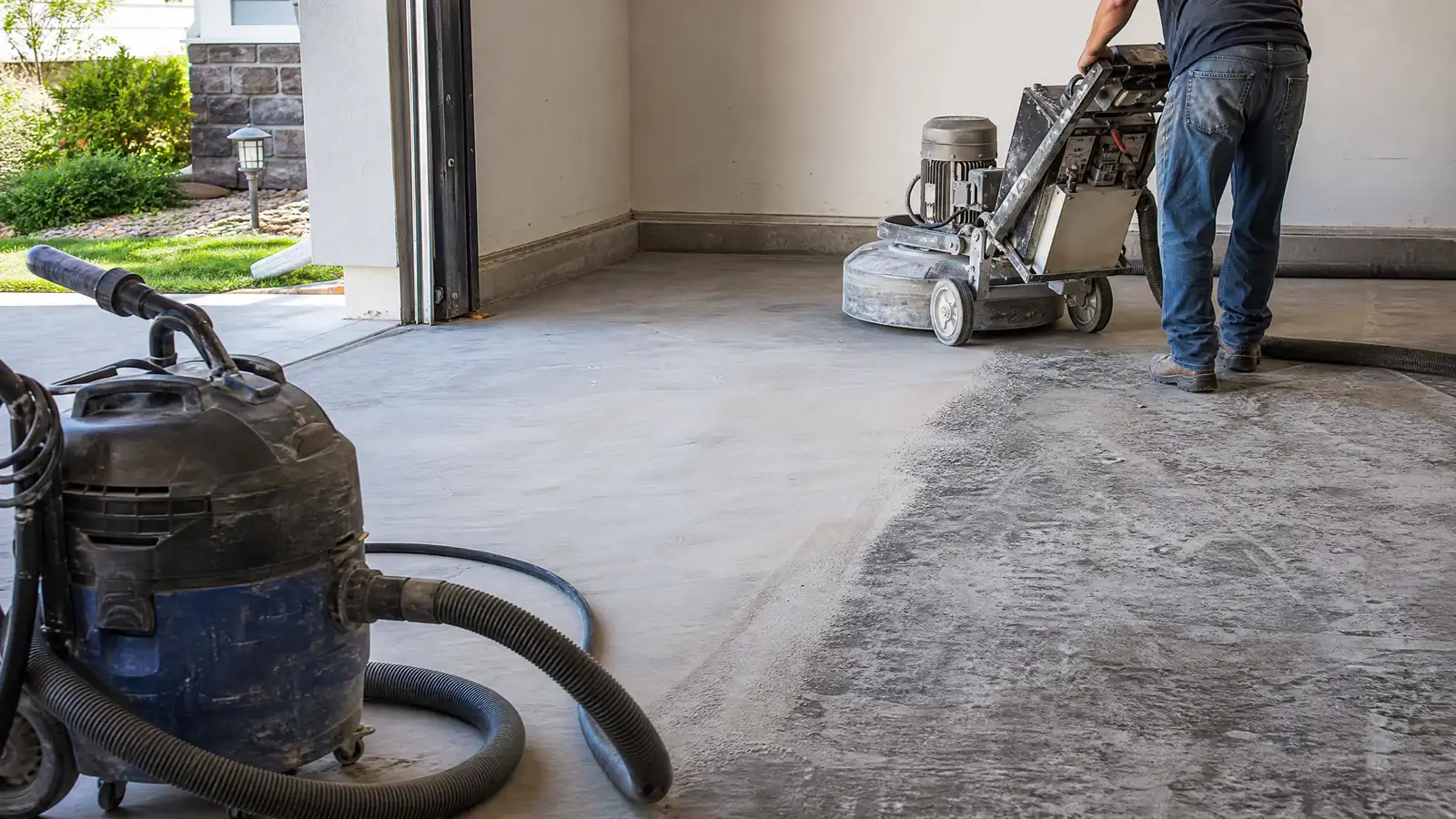
Diamond grinding uses a heavy machine with metal-bonded diamond segments to scrape the top layer off the concrete. It removes sealers, oil-stained surface, old paint, and the weak, chalky film that sits on many slabs. It also opens the pores of the concrete so the coating can grip.
Think of it like sanding wood before staining it. Stain on a glossy, sealed board just sits there. Stain on a sanded board soaks in and holds. Concrete works the same way. A grinder also levels small high spots and ridges, so the finished floor looks flatter and more even.
The grinder connects to a dust vacuum, which keeps the job much cleaner than older methods and lets the crew see the surface as they work.
Grinding vs. Acid Etching vs. Shot Blasting
Acid etching is the do-it-yourself favorite because kits are cheap and easy to find. The trouble is that etching results vary. It depends on how strong the acid is, how evenly it is rinsed, and how dense the concrete is. Troweled, hard-finished garage slabs often etch poorly, and leftover residue can interfere with the coating.
Grinding gives a more controlled and predictable profile. Shot blasting, which fires steel beads at the surface, is another professional option, though it is more common on large commercial floors. For a typical home garage, grinding is the practical choice.
Prep adds to the price, and it helps to know the numbers. Intermountain Coatings (July 2025) puts basic cleaning and etching at about $1 to $2 per square foot, and diamond grinding for damaged concrete at about $2 to $4 per square foot. The same guide lists crack repair and patching at about $3 to $5 per square foot. Those figures are guides, not quotes. Your slab’s condition sets the real number, which is why we look at it in person.
Moisture: The Check That Comes Before the Grinder
Grinding will not fix a wet slab. Moisture moving up through concrete is a leading cause of bubbling and lifting. That matters in Sumter, where the climate is humid subtropical and June highs average 87.3°F, rising to 90.2°F in July (Wikipedia, Sumter, South Carolina). Warm, damp air and ground moisture are a tough combination for a garage slab.
There are two common tests. The ASTM F2170 in-situ relative humidity test places probes at about 40 percent of slab depth for slabs that dry from one side (Wikipedia, Epoxy moisture control system). The ASTM F1869 calcium chloride test only measures the top quarter inch of the slab, so it can miss deeper moisture (Construction Canada). Typical epoxy coatings call for slab relative humidity of 75 percent or lower, but the coating maker’s data sheet sets the real limit for each product (One Stop Epoxy).
Concrete Network also notes that polyaspartic coatings should not go on a slab with a high moisture vapor emission rate, because moisture can make the coating bubble and lift. If a slab tests high, the fix may be a moisture-control primer or waiting for the slab to dry, rather than coating over the problem.
What to Expect on Prep Day
A solid prep process runs in a clear order:
- Inspect the slab and note oil stains, cracks, and old coatings.
- Test for moisture before any coating is planned.
- Grind the full surface, with edges and corners done by hand grinder.
- Fill cracks and spalled spots with repair material.
- Vacuum all the dust so nothing is trapped under the coating.
When you compare quotes, ask each contractor how they prepare the surface and whether moisture testing is included. A price that leaves out grinding may look lower, but it often costs more when the floor fails. Our epoxy garage floor coating page covers the full system, from primer to topcoat.
We serve Sumter and nearby communities, including the Shaw AFB area, with estimates and follow-up visits close to home. Whether you are off US 15, US 76/378, or SC 441, we can come to you.
Key Takeaways
- Diamond grinding removes weak surface material and gives the coating something to grip, which is why it is central to good epoxy floor prep.
- Acid etching is less predictable than grinding, especially on hard, smooth slabs.
- Moisture testing should come before grinding, particularly in Sumter’s humid summers.
- Prep costs vary with slab condition, so a written quote after an on-site look is the safest way to compare.
Ready to See What Your Floor Needs?
If your garage floor is stained, worn, or peeling, we will look at the slab, explain the prep step by step, and put the price in writing. Visit our epoxy garage floor coating page or call (839) 600-9293 to Get a Free Estimate.
Frequently Asked Questions
You can rent a grinder, but results depend on the machine, the diamond tooling, and dust control. Rental units are often lighter and slower, and edges still need hand work. If you try it, test for moisture first, and ask a pro to look at the slab before you buy coating.
For most garage floors, yes. Grinding is what gives the coating a clean, textured surface to bond to. Very new, unsealed concrete may need different prep, but a slab with sealer, paint, stains, or a smooth trowel finish generally needs to be ground.
Signs include damp patches, white powder on the surface, or a musty smell, but only a test gives a real answer. Plastic-sheet checks are rough. Professional tests such as ASTM F2170 give a reading you can compare against the coating maker's limit.
Ready for a floor that lasts?
Tell us about your garage, patio or shop floor. We reply with a written estimate and explain exactly how the concrete will be prepared.