
Commercial & Industrial Floors in Sumter, SC
Commercial & Industrial Floors in Sumter County, SC from a local coating specialist. Free on-site estimate and written quote, close to home. Call for a quote.
A shop floor that’s stained, dusty or flaking says something about the business before anyone says a word. A coating that peels after one summer costs more than the work itself. Sumter Epoxy Floors is a floor coating specialist based in Sumter County. We handle commercial and industrial floor coatings for showrooms, shops, warehouses and work bays, and we explain the prep before you spend anything. Questions? Call (839) 600-9293.
What prep is included in a typical job:
- Walking the slab with you and checking for cracks, oil stains, old coatings and damp spots
- Moisture testing before any product is chosen
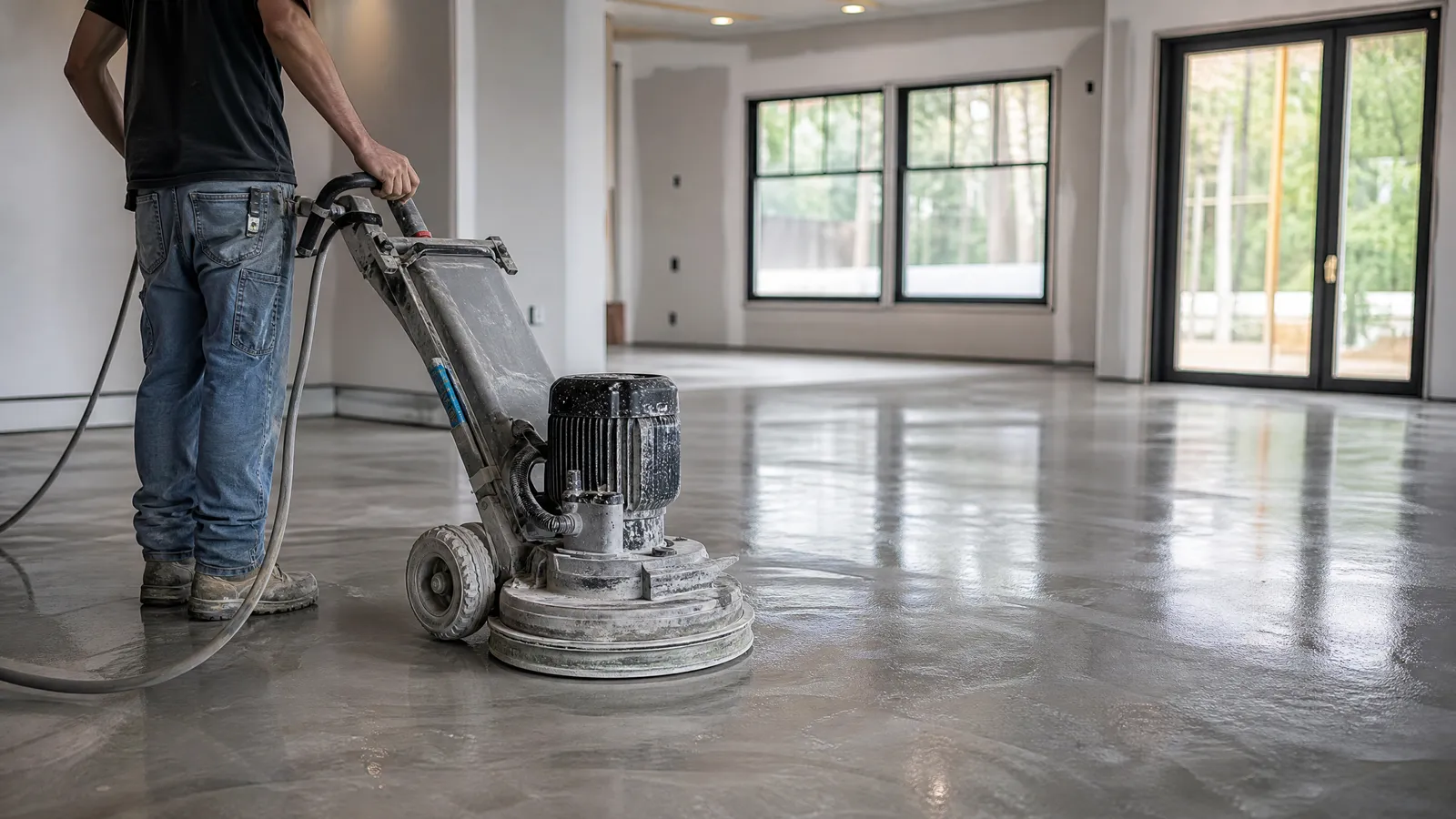
- Mechanical grinding to open up the concrete
- Crack and joint repair, then a final cleaning
- Coating applied in stages, with the cure time explained up front
How much do commercial and shop floor coatings cost?
Epoxy typically runs $2 to $12 per square foot installed, materials and labor included (Angi, updated Aug 3, 2026). Professionally installed systems total about $6 to $15 per square foot (Intermountain Coatings, July 2025). Your quote depends on slab condition, the coating type and how much repair is needed.
Several things move the number:
- Coating type. Water-based epoxy runs about $3 to $7 per square foot, solvent-based $4 to $9, 100% solids epoxy $5 to $12 and metallic epoxy $8 to $15 (Intermountain Coatings, July 2025).
- Prep work. Basic cleaning and etching adds about $1 to $2 per square foot, diamond grinding for damaged concrete about $2 to $4, and crack repair and patching about $3 to $5 (Intermountain Coatings, July 2025).
- Size and use. For scale, a two-car garage of about 500 square feet typically prices at $1,500 to $6,000 for epoxy (Angi, updated Aug 3, 2026). A professionally installed polyurea garage coating averages around $4,000 for a standard two-car garage (The Home Depot, 2026). A work bay or showroom follows the same logic: more square footage, heavier use and rougher concrete all push the price up.
The only way to get a real figure for your floor is to look at it. We give a free on-site estimate and put the price in a written quote, so you can compare it line by line with any other bid.
Why do coatings peel, and what stops it?
Most coatings peel because of what happened to the concrete before the coating went on: moisture in the slab, leftover oil, a weak surface layer or skipped grinding. Good prep is what keeps a coating attached. Here is how we approach it, step by step.
- Inspect the slab. We look for oil spots, old paint or sealer, cracks, spalled edges and signs of dampness.
- Test for moisture. More on this below, because it matters most.
- Grind the surface. Diamond grinding removes the weak top layer and gives the coating something to grip. Acid etching alone often isn’t enough on a worn commercial floor.
- Repair damage. Cracks, joints and chipped areas are filled and leveled so they don’t telegraph through the finish.
- Clean thoroughly. Dust left on the slab becomes a weak layer under the coating.
- Apply the system. The coating goes down in stages, following the manufacturer’s mixing and cure instructions.
Do I need to test my concrete for moisture before coating it?
Yes. Moisture moving up through a slab is a leading cause of bubbling and lifting, and a test is the only way to know what your slab is doing. Typical epoxy coatings call for slab relative humidity of 75 percent or lower, but the coating maker’s data sheet sets the real limit for each product (One Stop Epoxy, accessed Oct 2026).
There are two common methods. The ASTM F2170 in-situ test places probes at about 40 percent of slab depth for slabs that dry from one side, or 20 percent when they dry from both sides (Wikipedia, Epoxy moisture control system). The ASTM F1869 calcium chloride test measures only the top quarter inch of the slab, so it can miss deeper moisture (Construction Canada, accessed Oct 2026).
If the slab reads too wet, we tell you and talk through options, such as a moisture-control primer or waiting. That conversation happens before you commit, not after something bubbles. Polyaspartic coatings in particular shouldn’t go over a slab with a high moisture vapor emission rate, because moisture can make the coating bubble up and lift (Concrete Network, accessed Oct 2026).
Do humid Sumter summers affect a concrete floor?
They can. Sumter has a humid subtropical climate, with average daily highs of 87.3°F in June, 90.2°F in July and 88.5°F in August (Wikipedia, Sumter, South Carolina, accessed Oct 2026). Warm, damp air and ground moisture both affect how concrete behaves and how a coating cures.
In practice, that means slabs on grade, older buildings and floors with no vapor barrier deserve a closer look. It also means mixing, application and cure timing have to account for heat and humidity. We check the slab and plan around the conditions on the day, rather than applying a one-size-fits-all schedule.
Will hot tires lift a coating?
Hot tire pickup happens when heat and pressure from a tire soften a coating that wasn’t properly bonded or wasn’t designed for the load. The tire pulls up a patch of the finish as it cools. It is mostly a prep and product-selection problem, and it’s one reason we ask how the floor is used.
A showroom with customer cars, a shop with service vehicles and a warehouse with forklifts all stress a floor differently. Tell us what rolls across it, how heavy it is and how often. That shapes the coating recommendation and how we prepare the slab. Epoxy and polyaspartic each have strengths here. Installers describe polyaspartic as UV stable and lasting 15 to 25 years with care, but those are manufacturer and installer claims, not independent test results (Concrete Network, accessed Oct 2026). We’ll walk you through the tradeoffs for your building.
Our Specialist Services
Two dedicated pages cover the work in more detail:
- Commercial Floors are for showrooms, offices, retail spaces and other customer-facing areas where appearance and easy cleaning matter as much as durability.
- Shops & Warehouses are for work bays, storage areas and production floors that take forklifts, spills, chemicals and constant foot traffic.
If your building has a bit of both, such as a front showroom with a service area behind it, we can walk through the sections together and price them separately in your written quote.
Serving Sumter and Nearby Towns
We’re based in Sumter County, so estimates and follow-up visits are close to home. We work in Sumter itself and in surrounding communities such as Dalzell, Mayesville, Pinewood, Manning and Camden. We also serve the Shaw AFB community and the businesses and homes around it.
If you’re along US 15, US 76/378 or SC 441, you’re on our regular routes. A local base means a quick visit if you have a question about your floor later on.
Ready to Talk About Your Floor?
Tell us about your space, how it’s used and what’s wrong with the floor now. We’ll come out, look at the slab, run the moisture checks and give you a written quote that spells out the prep. Call (839) 600-9293 or Get a Free Estimate today.
How It Works
From first call to a floor you can drive on
Tell us about the space
Call or send photos of the floor and what you use it for.
We visit and quote
A free on-site visit, then a written quote with every step listed.
Prep the concrete
Grinding, crack repair and cleaning so the coating bonds properly.
Apply and hand over
Coating, finish and a walk-through with care instructions.
Ready for a floor that lasts?
Tell us about your garage, patio or shop floor. We reply with a written estimate and explain exactly how the concrete will be prepared.